

The blank test
© BS&A
Before the live shot, the whole chain is checked: triggering, synchronisation, framing.
Structure, building envelope and fit-out elements, systems or prototype: we design the test with you, conduct it on our own site in France and hand you a comprehensive test report.
It all starts from what you need to demonstrate. We design the set-up and instrumentation with you, then hand over the test report; where required, an independent inspection body draws up the official test record.
EN 13123Explosion resistance of windows, doors and shutters: requirements and classification. · EN 13124Explosion resistance of windows, doors and shutters: test methods.
Your product is tested to EN 13123 and EN 13124: you know the EXR classification it achieves.
For manufacturers of doors, glazing, window frames and curtain walls.
Defence
We measure the blast and fragments of a munition, to know its real effects.
For players in defence and space.
R&D
Where no standard exists, the test shows whether your solution holds, or sheds light on a little-understood phenomenon.
For all public and private players.
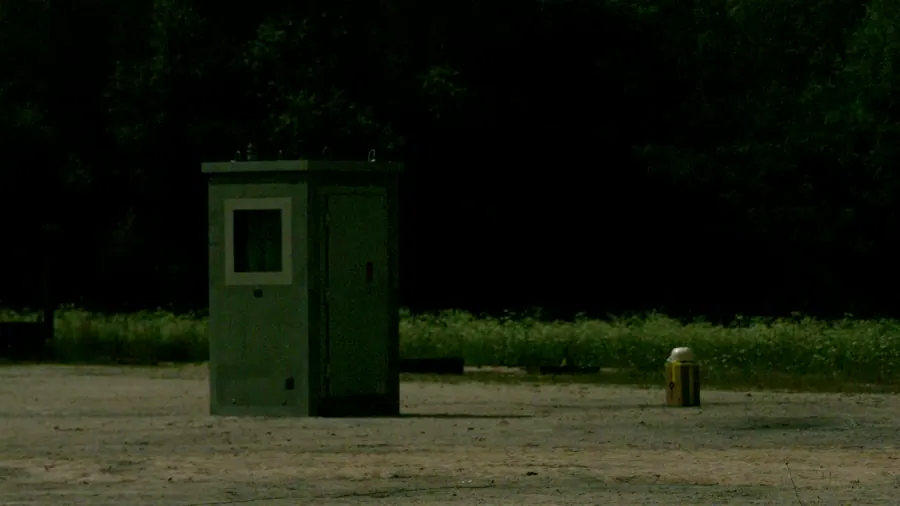
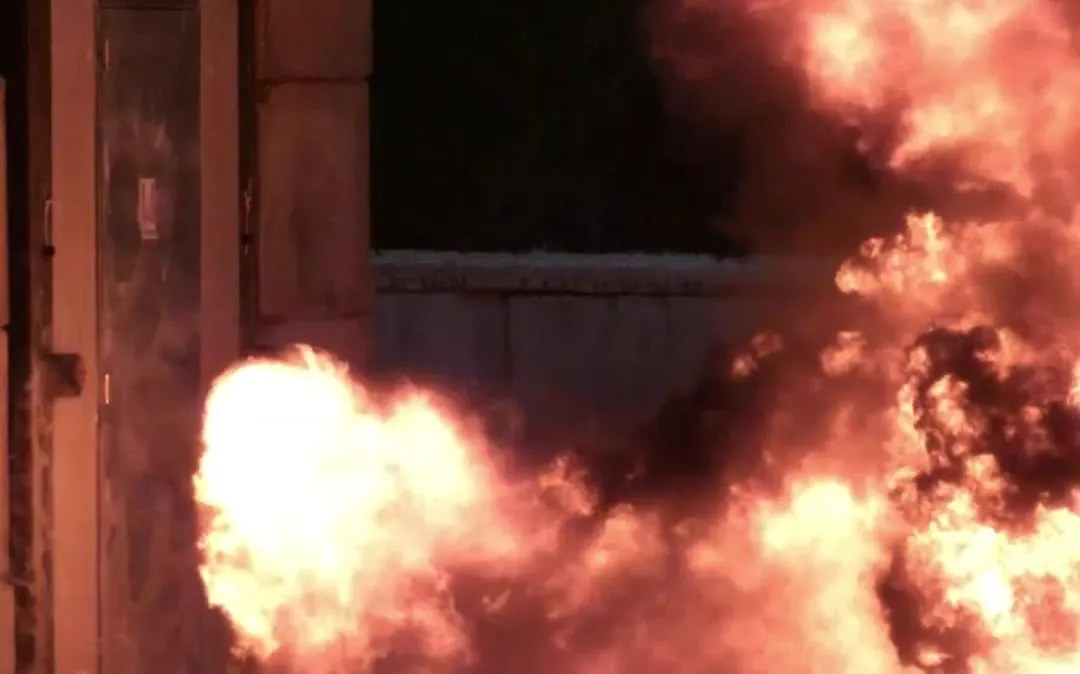
Explosion on a guardhouse fitted with bullet-resistant glazing and a blast door. Step through it frame by frame, from the flash to the dust raised by the negative phase of the wave: this is how we analyse a test.
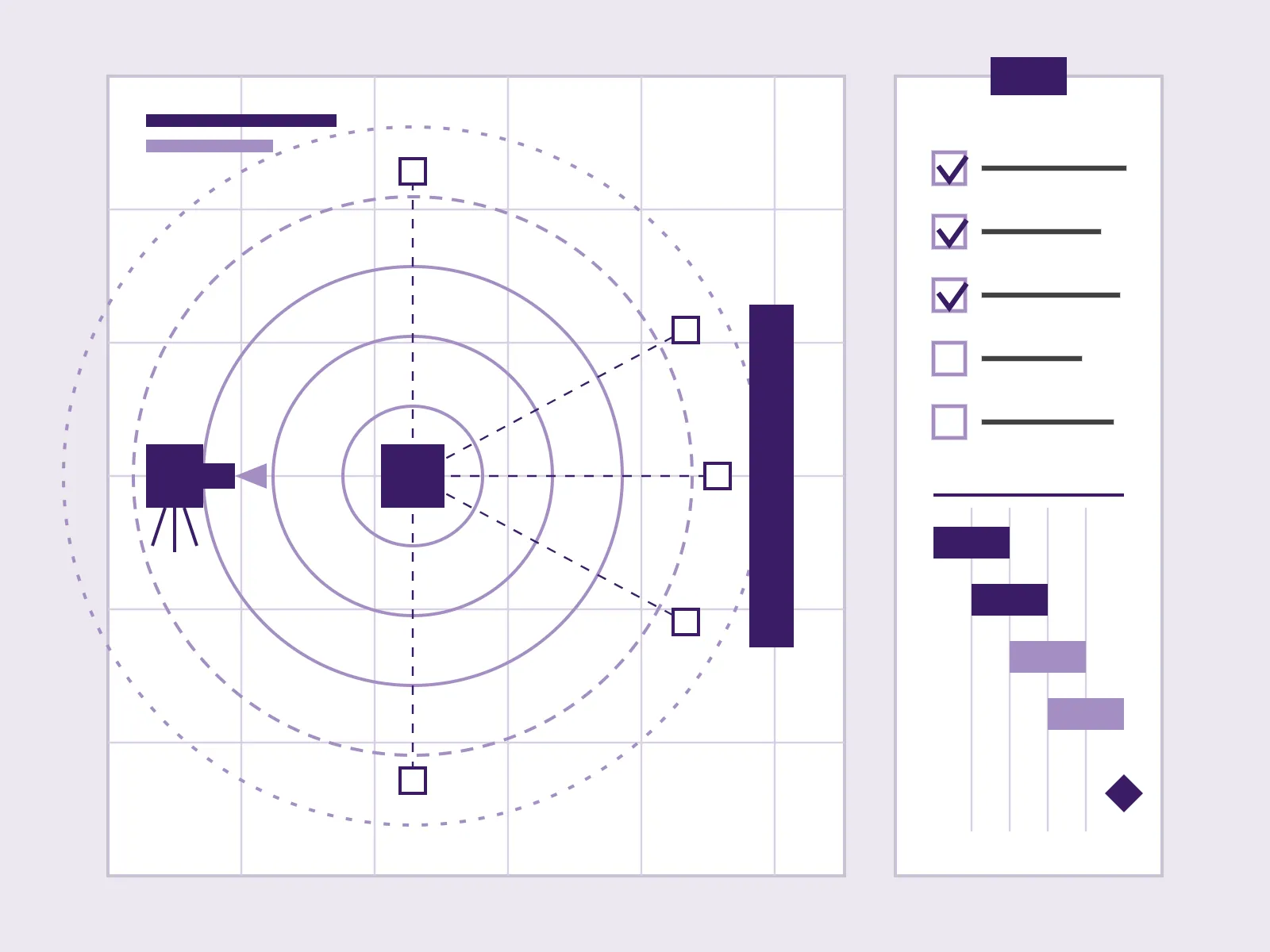
Sensor layout diagram
View from the high-speed colour camera, 20,000 fps
 © BS&A
A single point of contact conducts your test, from sketch to report. Site, teams and measurement equipment are our own: lead times stay short.
We start from what must be demonstrated to settle the charge, the distances and the specimen. You receive a clear installation plan showing where each sensor and each camera will stand; simulation puts it to the test beforehand, to keep the number of tests down.
See a test plan →We take charge of the works: safety studies, permits, handling of explosives by qualified pyrotechnicians. On our own site, we build whatever the test requires, from barricades and slabs to structures designed specifically for your specimen.
We install the sensors, then process the signals (pressures, displacements, high-speed footage) through to the test report. Where needed, we update the numerical models against the measurements, to improve the design of your product.
Our acquisition chains are our own: we size them for each test, trigger them in synchrony and process the signals ourselves.
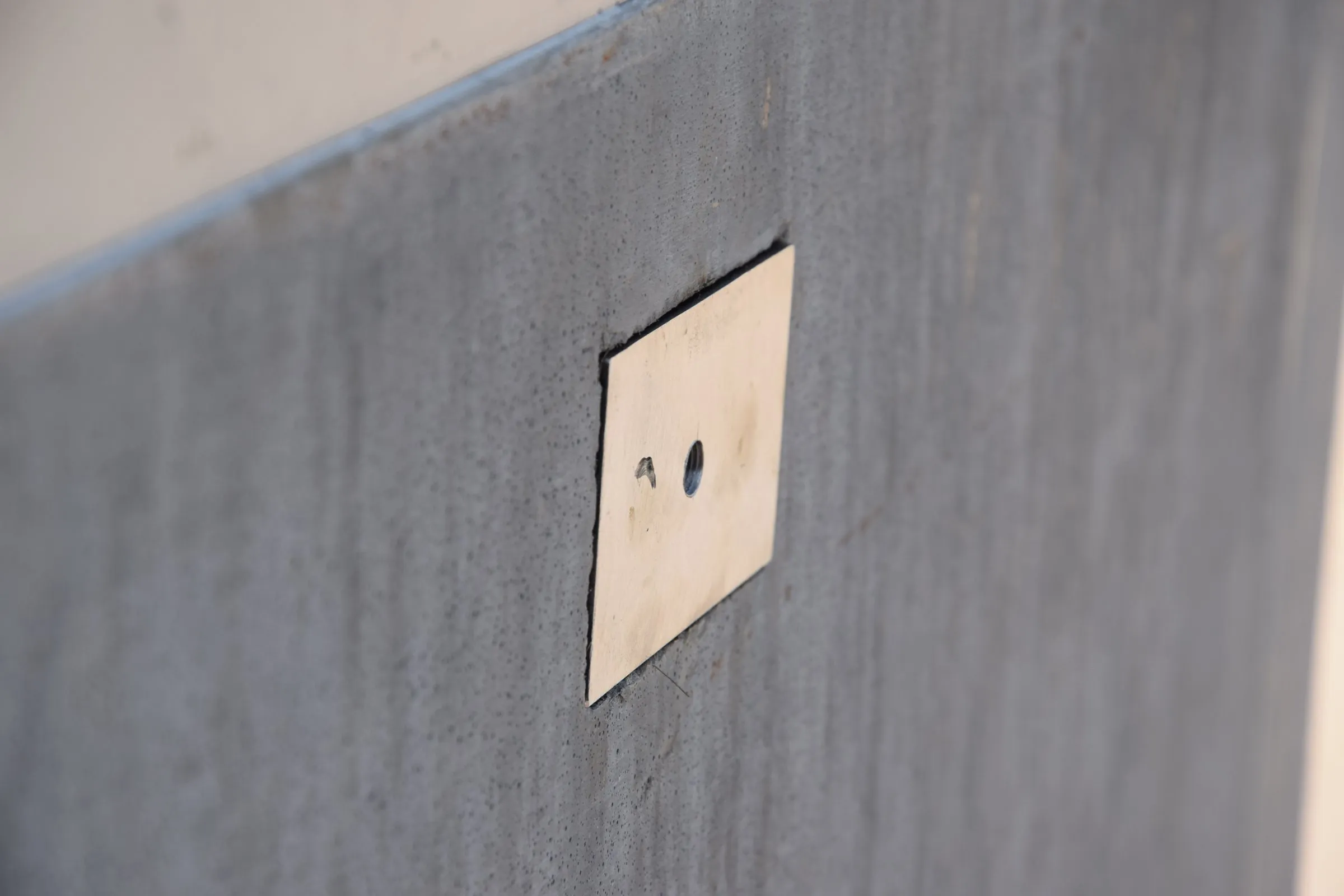
Flush-mounted and free-field sensors: incident and reflected pressures, impulse, positive-phase duration.
Temperature measurements near the charge, to characterise the effects of the fireball.
High-speed cameras up to 20,000 frames per second, synchronised with the acquisition: every frame can be read against the signal.
Displacements and fragment velocities: what the structure endured, quantified.
The engineer who ran the calculation is present at the test: they build the set-up, install the sensors, supervise the tests and process the measurements. Whoever wrote the model confronts it with reality, that very day.
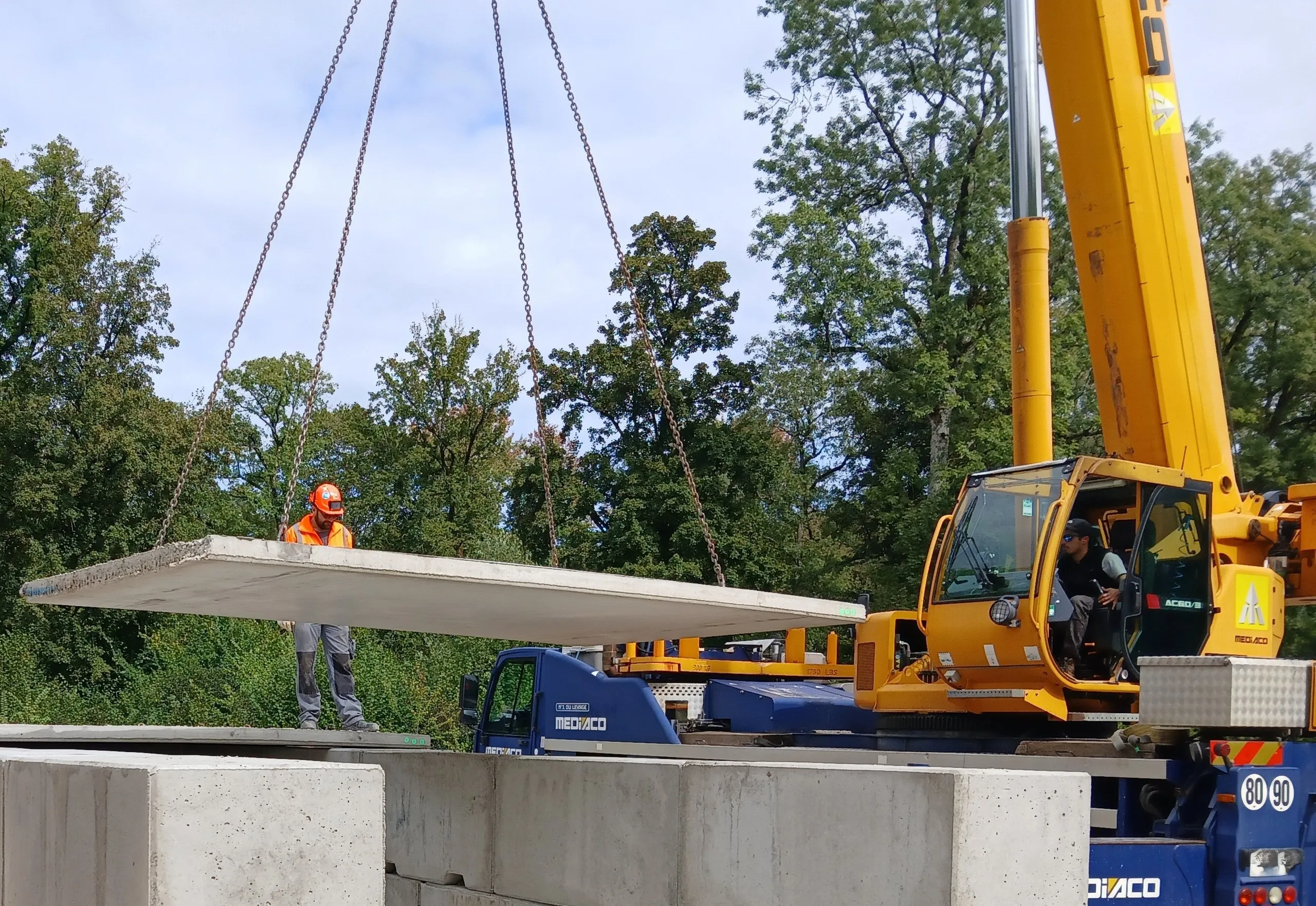
Our tests take place on a private site that we lay out and reconfigure for each campaign: barricades, blocks moved by crane, slabs, specimen supports.
A 30 by 5 metre test slab, concrete frames for testing doors and window units, custom set-ups designed for EN 13123 and EN 13124, and handling capacity up to 50 tonnes.
 © BS&A
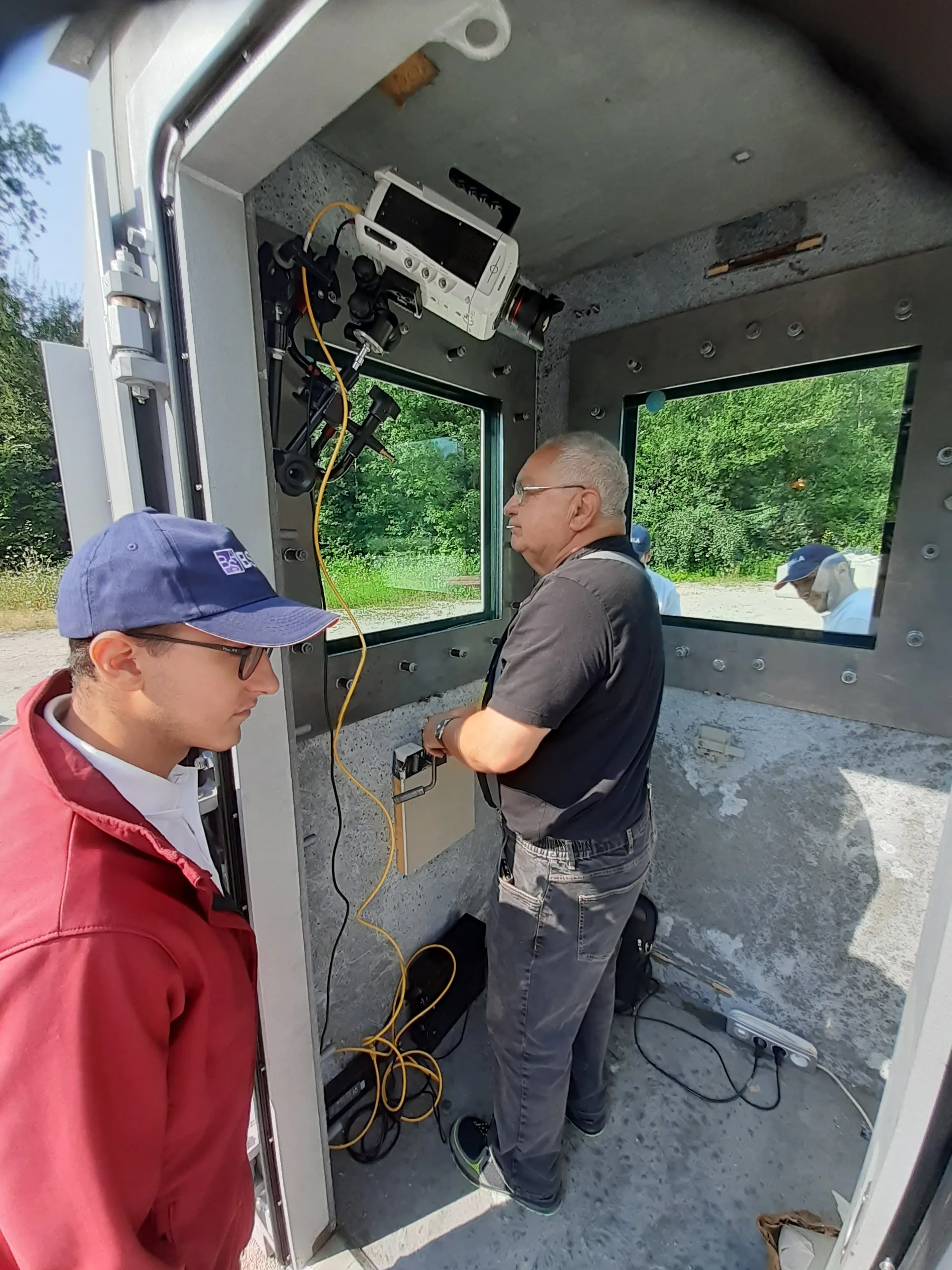
High-speed cameras capture, frame by frame, what the eye cannot see: the detonation, the shock front, the response of the structure. They are often decisive in understanding the phenomena.
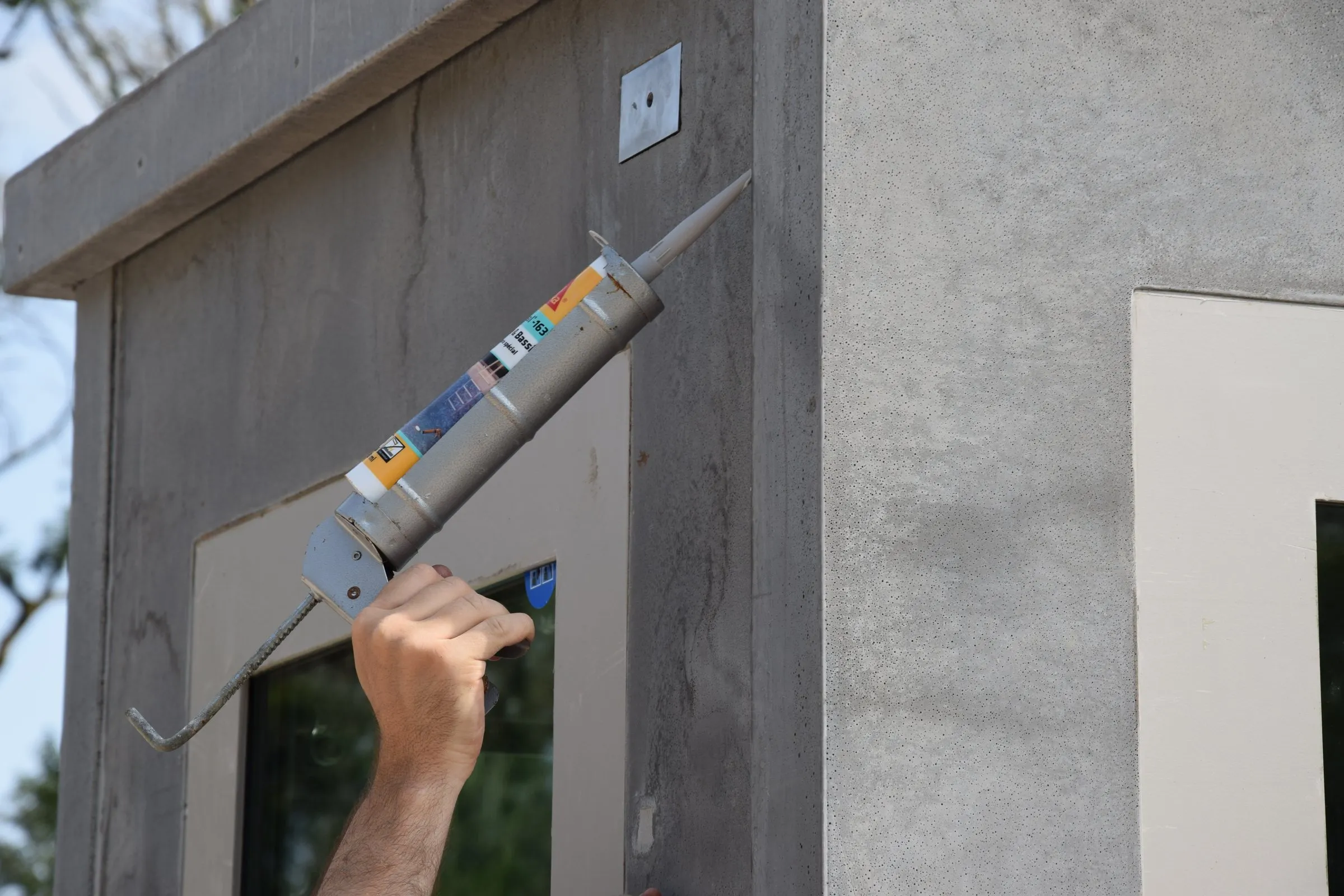
Before the live shot, the whole chain is checked: triggering, synchronisation, framing.
A charge in a special solution (FEVDI), filmed in slow motion.
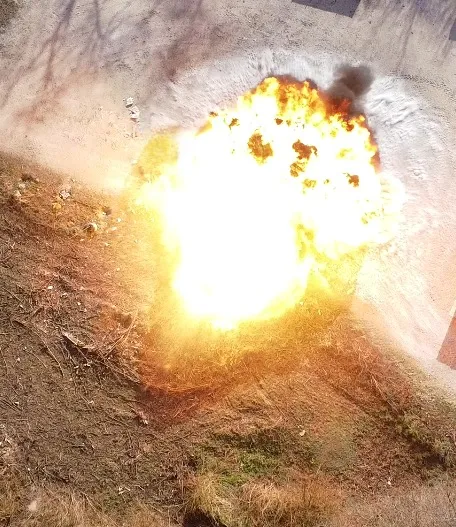
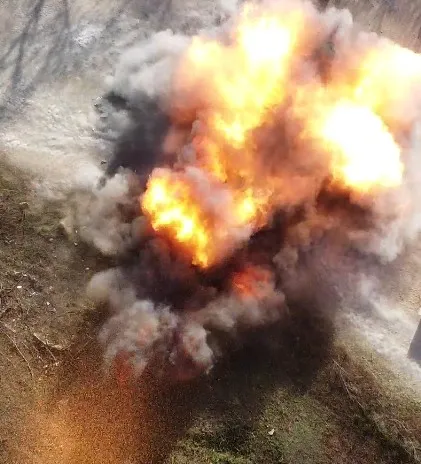
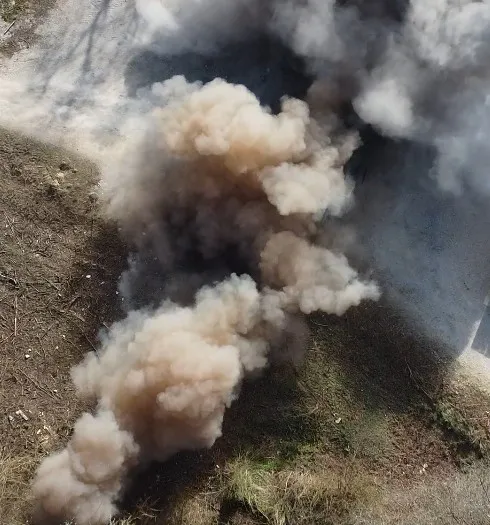
FEVDI ↗Three pictures taken in a row by our drone, straight above the firing range.
 © BS&A
 © BS&A
 © BS&A
 © BS&A
 © BS&A
 © BS&A
 © BS&A
 © BS&A
Testing
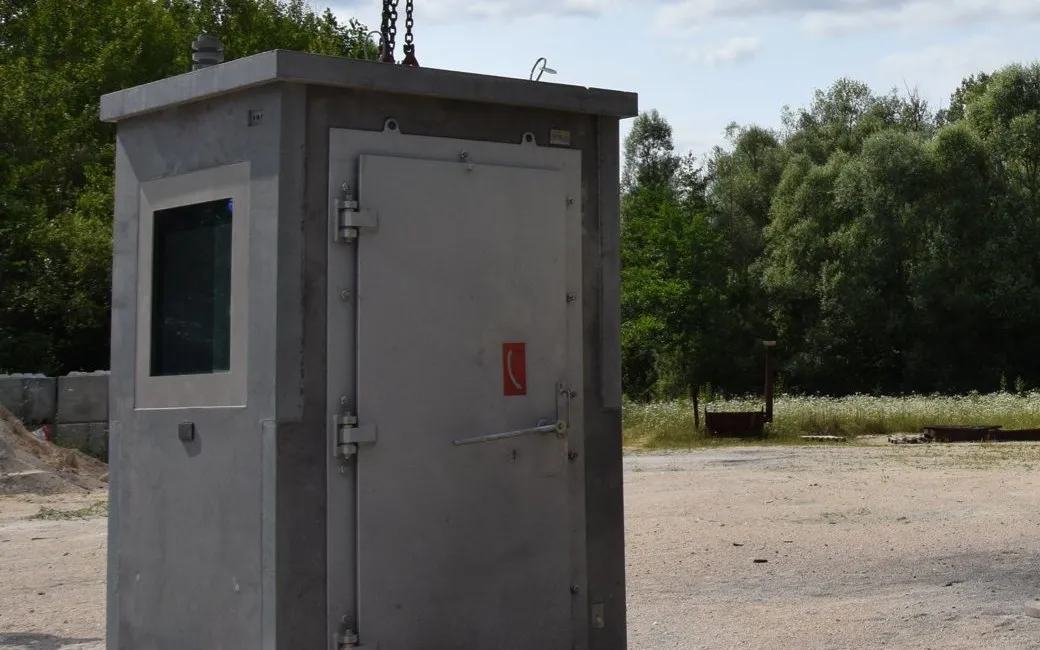
Qualifying a protective guardhouse against blast. BS&A conducted 5 shots on the same FEHR Group guardhouse to EN 13123 and EN 13124: EXR1, EXR2 and EXR3 levels are achieved for the guardhouse, its Mineur Bécourt Systèmes door and its Riou Glass glazing.
 © BS&A
Testing
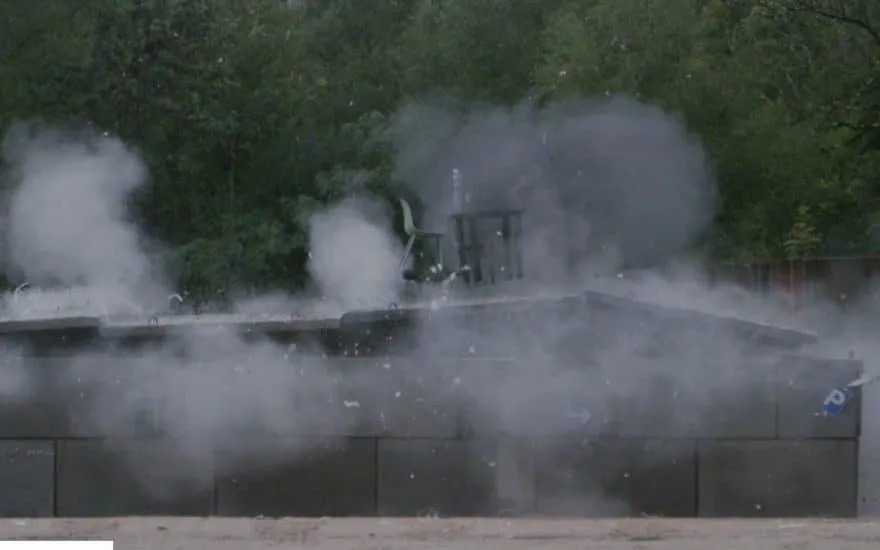
Qualifying single and double doors against blast. BS&A designed and conducted the tests to EN 13123 and EN 13124: EXR1, EXR2 and EXR3 levels are achieved.
 © BS&A
Research
Measuring the effect of a vehicle battery explosion in a confined space. With the Fondation MAIF pour la recherche, APEX Solutions and INSA Centre-Val de Loire, BS&A conducted tests in a car park and in a tunnel, to demonstrate the effects of an internal explosion and its consequences for the infrastructure.