

Engineering with an in-house design office
We protect people, property and infrastructure against blast, impact, earthquake and tornado, for defence, nuclear and critical industries.
- UFC 3-340-02US Department of Defense criteria for designing structures to resist the effects of accidental explosions.
- Eurocodes / ENEuropean standards for structural design (EN 1990 to EN 1999).
- UHPFRC NF P18-470 / P18-710Ultra-high performance fibre-reinforced concrete: NF P18-470 covers the material, NF P18-710 the structural design (French annex to Eurocode 2).
- French explosives safety regulationsFrench rules governing safety in explosives facilities: risk assessment, effect zones, separation distances.
- AASTP (NATO)NATO publications on the storage and transport of ammunition (Allied Ammunition Storage and Transport Publications).
- IATG (UN)United Nations technical guidelines for the safe management of ammunition (International Ammunition Technical Guidelines).
- Civil engineering
- Mechanical engineering
Our business
We inform your decisions on three questions:
- Which threats are your facilities genuinely exposed to?
- What are the consequences of an explosion, an impact or an earthquake?
- Which measures should be taken, and in what order?
We answer them with a single point of contact and an entirely in-house chain: threat, simulation, testing, verification.
You decide on verified results, with protection designed for what is genuinely required and compliant with the regulations.
80% of deaths in an explosion are caused by glazing
- Detail A · glazing and frame, designed
- Detail B · reinforced concrete wall, designed
Our simulation capabilities
From the model to the study report, simulation is carried out in-house.
The most recognised commercial codes
We work with the commercial codes that set the standard in the field, LS-DYNA, ANSYS Mechanical, ABSTRAO or VIPER::BLAST, some of which are qualified under ISO 19443.
Codes for R&D
We also use open-source codes, Salome-Meca for instance, and develop our own bridges so that software packages can talk to each other.
Dedicated computing infrastructure
In-house CPU and GPU servers, sized for fast dynamics and large models.
Models validated by our tests
Our full-scale tests feed our materials databases and allow us to validate our engineering tools.
Interface codes developed in-house
We develop our own bridges to transfer results from one software package to another and chain calculations together.
Civil engineering and engineering structures
Buildings, structures and envelopes subjected to blast, impact or earthquake: from the scale of a city block down to the detail of a reinforcement layout.
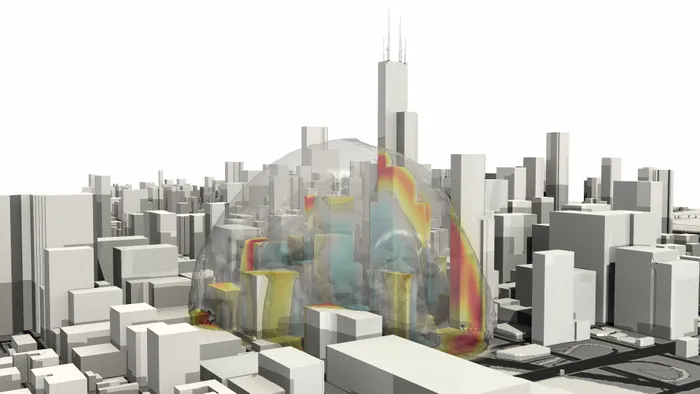 © BS&A
Blast wave propagating across a city block 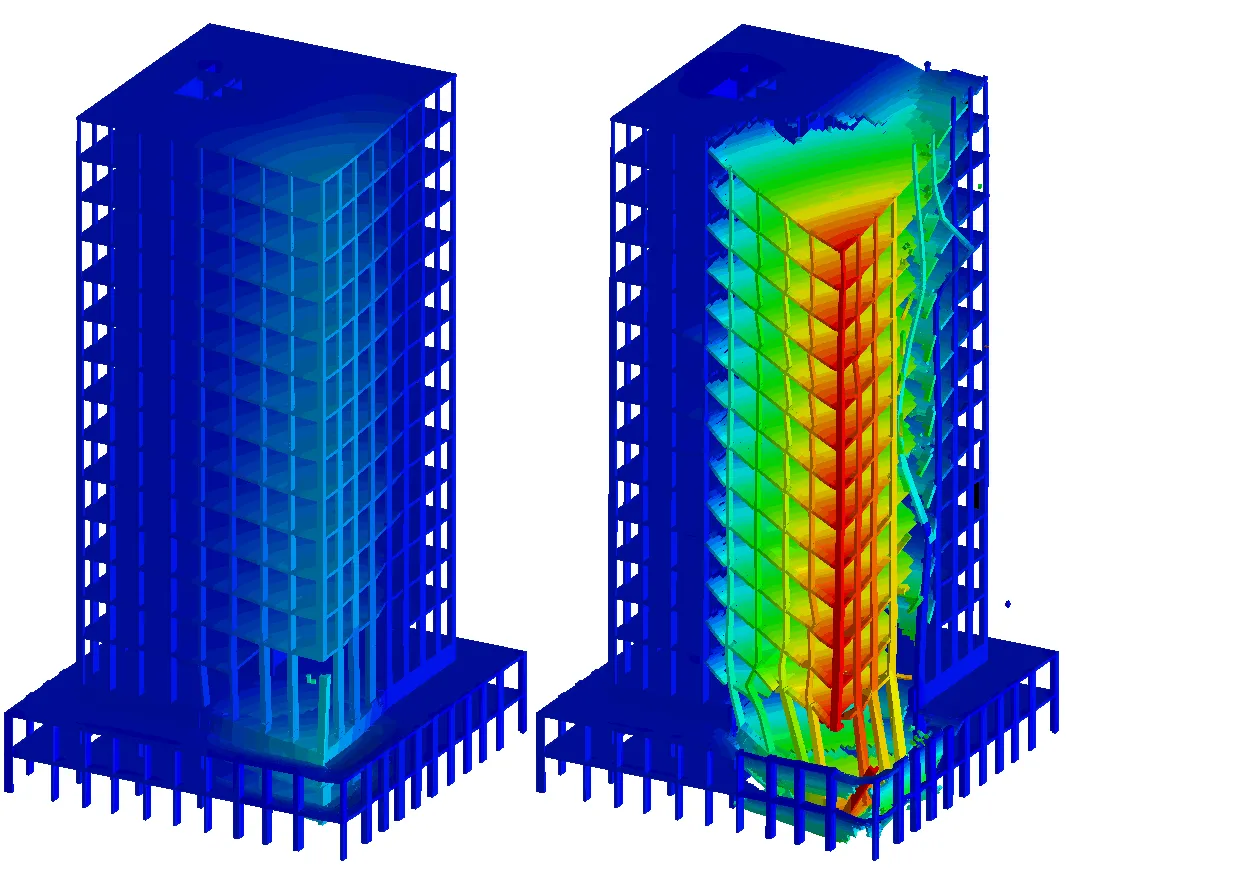 © BS&A
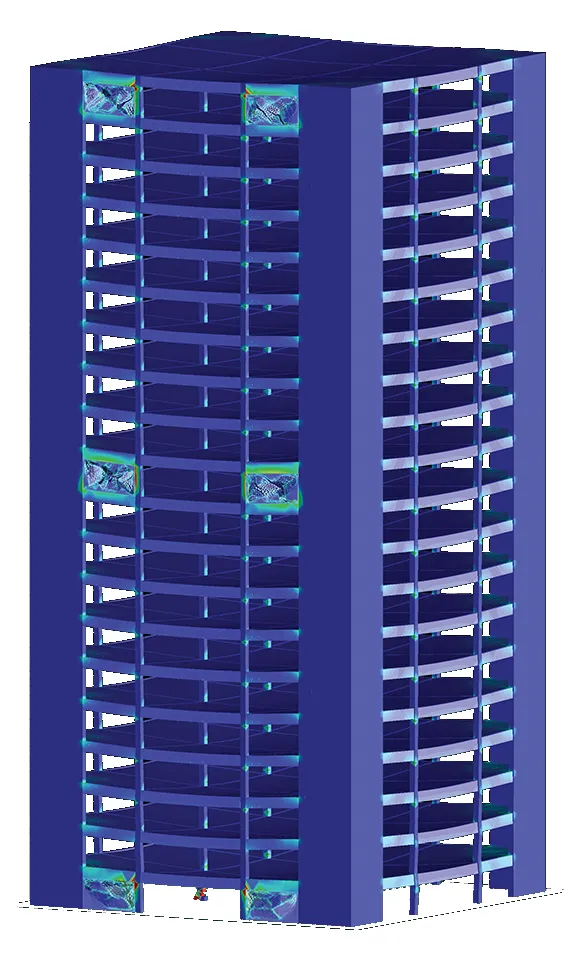
Stresses in a high-rise building 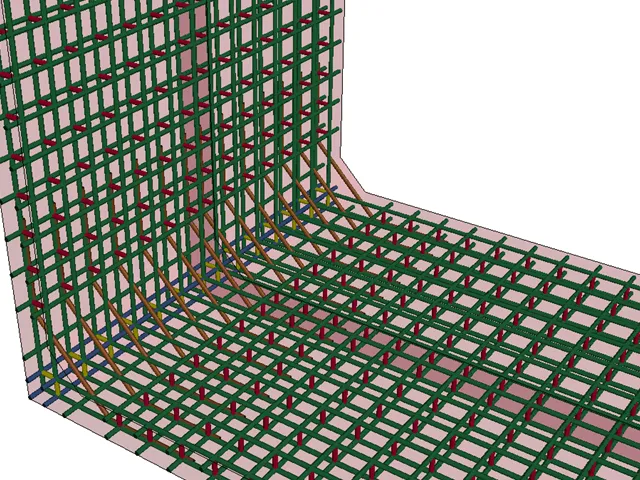 © BS&A
Reinforcement to pyrotechnic recommendations 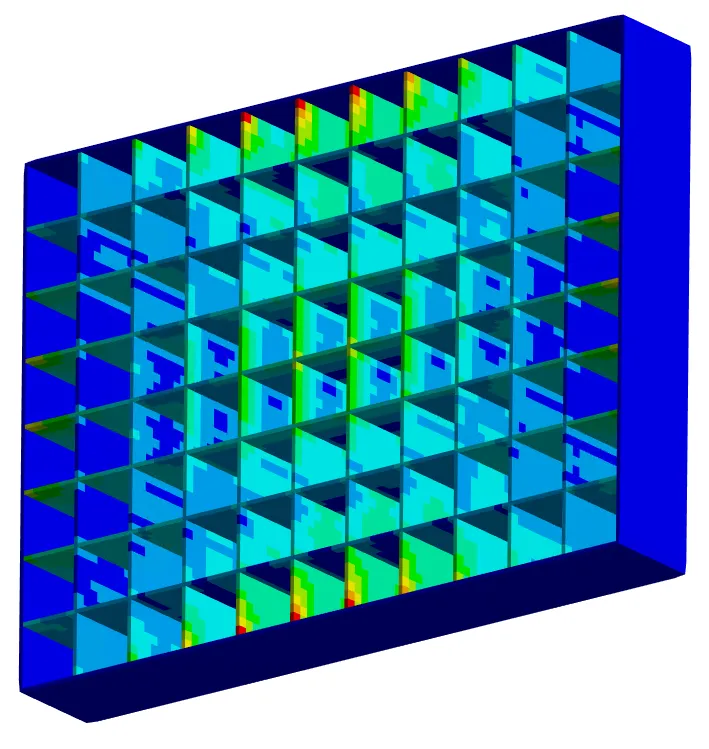 © BS&A
Stresses in a cellular box structure
Advanced mechanics of structures and materials
Equipment, assemblies and materials under extreme loading: perforation, fragmentation, integrity of pressurised components.
 © BS&A
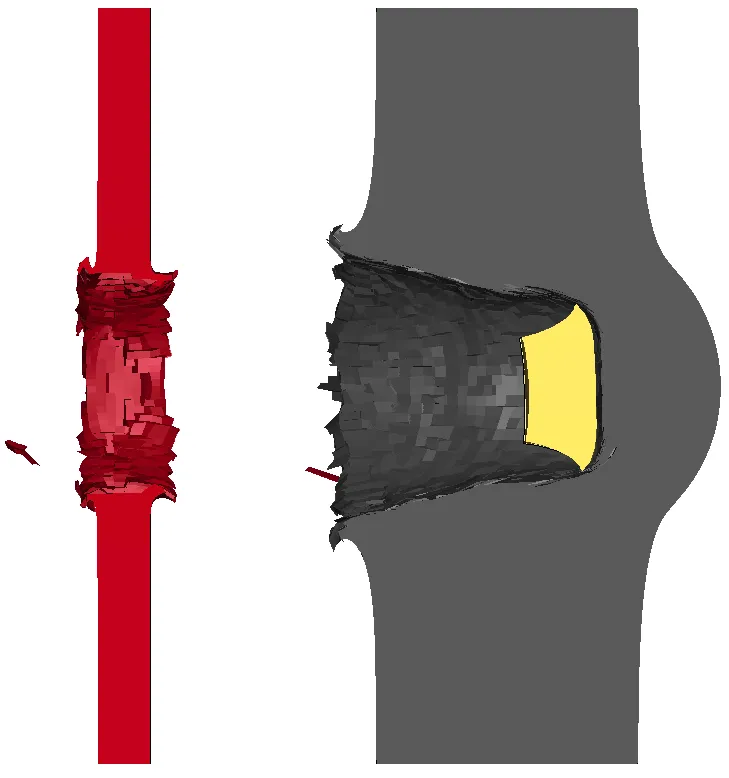
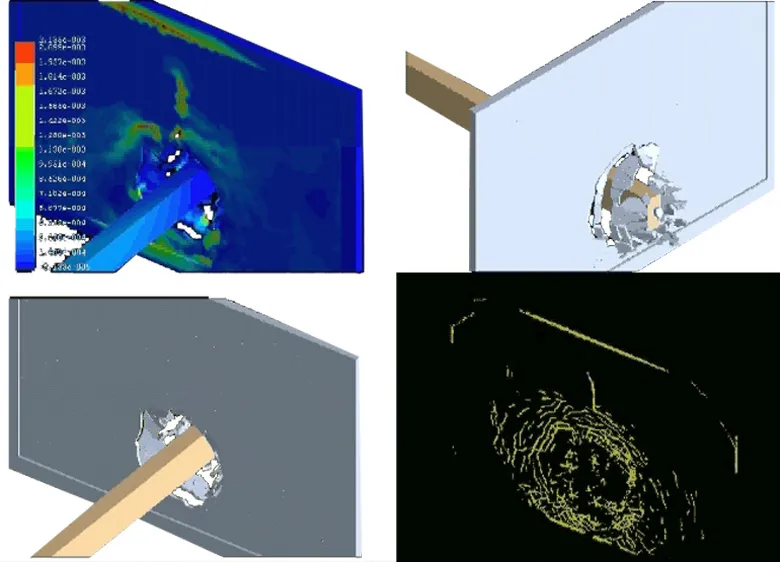
Perforation of a sheet and then a thick plate 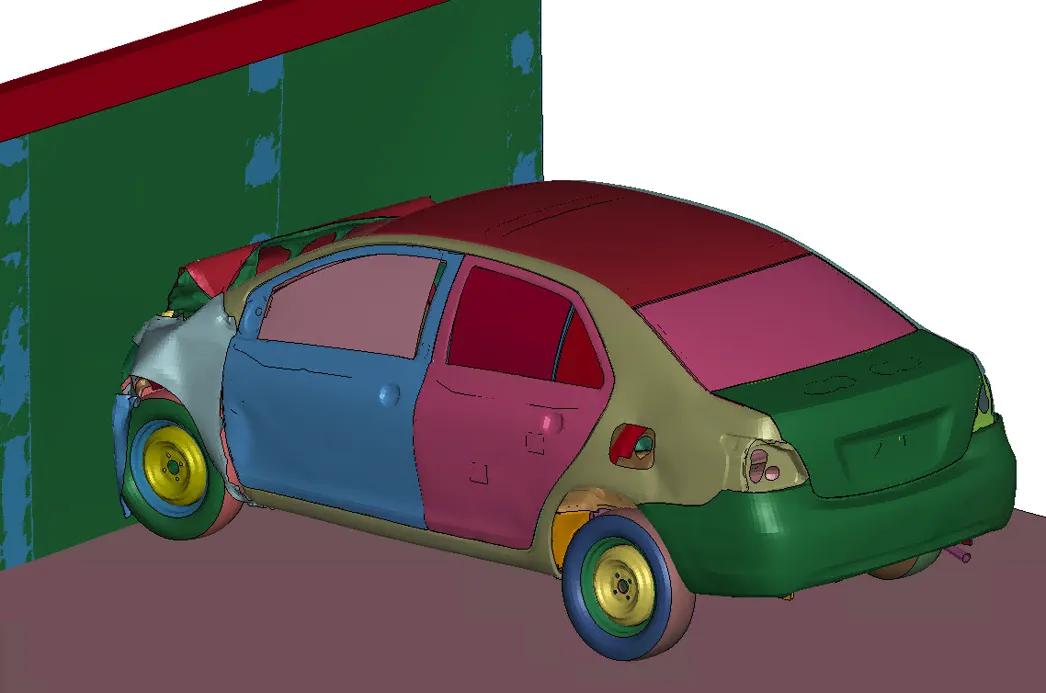 © BS&A
Vehicle impact against a wall 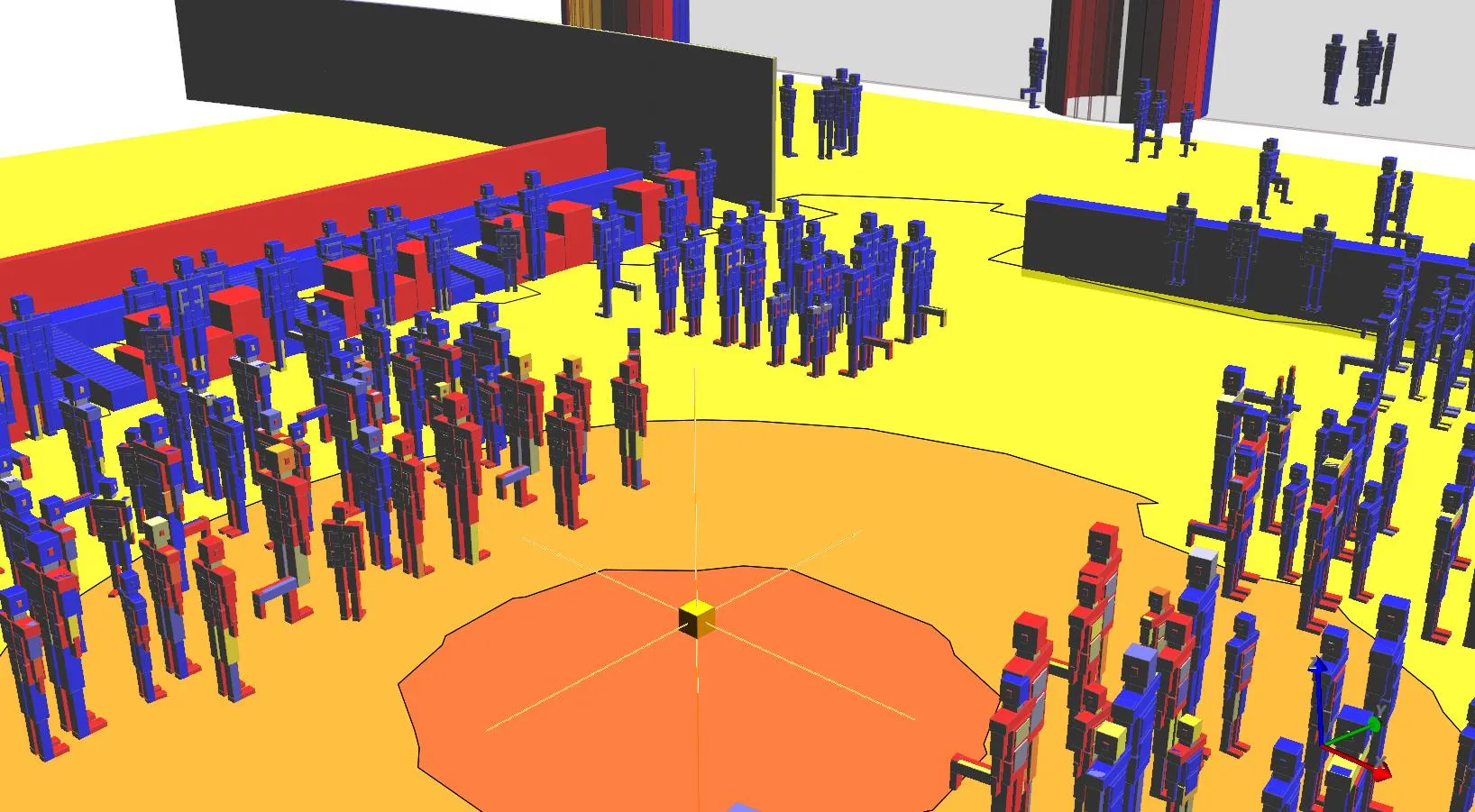 © BS&A
Injury zones in a crowd exposed to blast 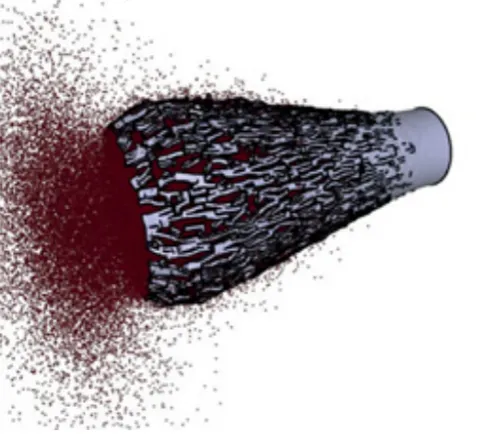 © BS&A
Debris projection when a casing ruptures
Our services
From one-off advice to independent expert review, on civil engineering structures and mechanical equipment alike.
Advisory
Before any study, we set with you the applicable framework, the level of protection and the share of testing.
Technical assistance
For a tender or a complex situation, one of our engineers supports you: they review your project and identify potential savings on exposed buildings.
Simplified calculation notes
Preliminary design and verification using the simplified methods of fast dynamics (SDOF, DLF, charts), with our software suite.
Advanced calculation notes
Justification of structures and equipment against shocks, impacts and explosions, but also earthquakes and tornadoes, through numerical modelling and in line with the applicable frameworks.
Digital audit and blast assessment
We rebuild your buildings in 3D, calculate the effects of an explosion and map the consequences. You receive a prioritised action plan.
Expert and counter-expert review
We review calculation notes and carry out independent assessments, after an incident or to support a technical position.
Research and development
We carry out research, alone or with laboratories and industrial partners, on the phenomena that current frameworks do not yet cover.
Calculation on demand
For a one-off need in explicit dynamics: our servers, our ANSYS LS-DYNA licences and the support of our engineers, sized to your project.
Project management
The same skills then come together in a single, continuous assignment, from master plan to construction.
- 01
Master plan
- Needs definition support
- Threat analysis
- 02
Conceptual design
- Security design and physical protection
- Preliminary design
- 03
Detail design
- Numerical simulation
- Advanced calculation notes
- 04
Construction
- Drawing review
- Site visits
- Expert and counter-expert review
Regulations and standards
We apply the regulations and standards of your sector: our calculation reports are ready to be examined by the competent authority.
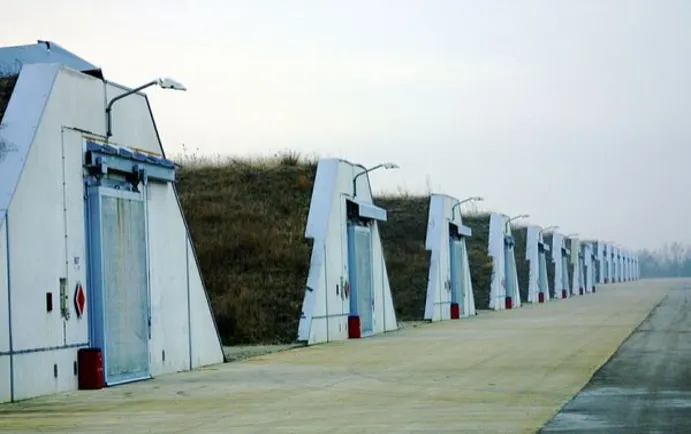
Explosives and ammunition
Workplace safety studies, effect zones, UXO clearance, ammunition storage and transport.
- Order of 20 April 2007French rules on risk assessment and accident prevention in explosives facilities.
- Order of 7 November 2013French rules on the content of the workplace safety study and safety instructions required for any explosives activity.
- AASTP (NATO)NATO publications on the storage and transport of ammunition (Allied Ammunition Storage and Transport Publications).
- IATG (UN)United Nations technical guidelines for the safe management of ammunition (International Ammunition Technical Guidelines).
 Sebleouf, CC BY-SA 4.0
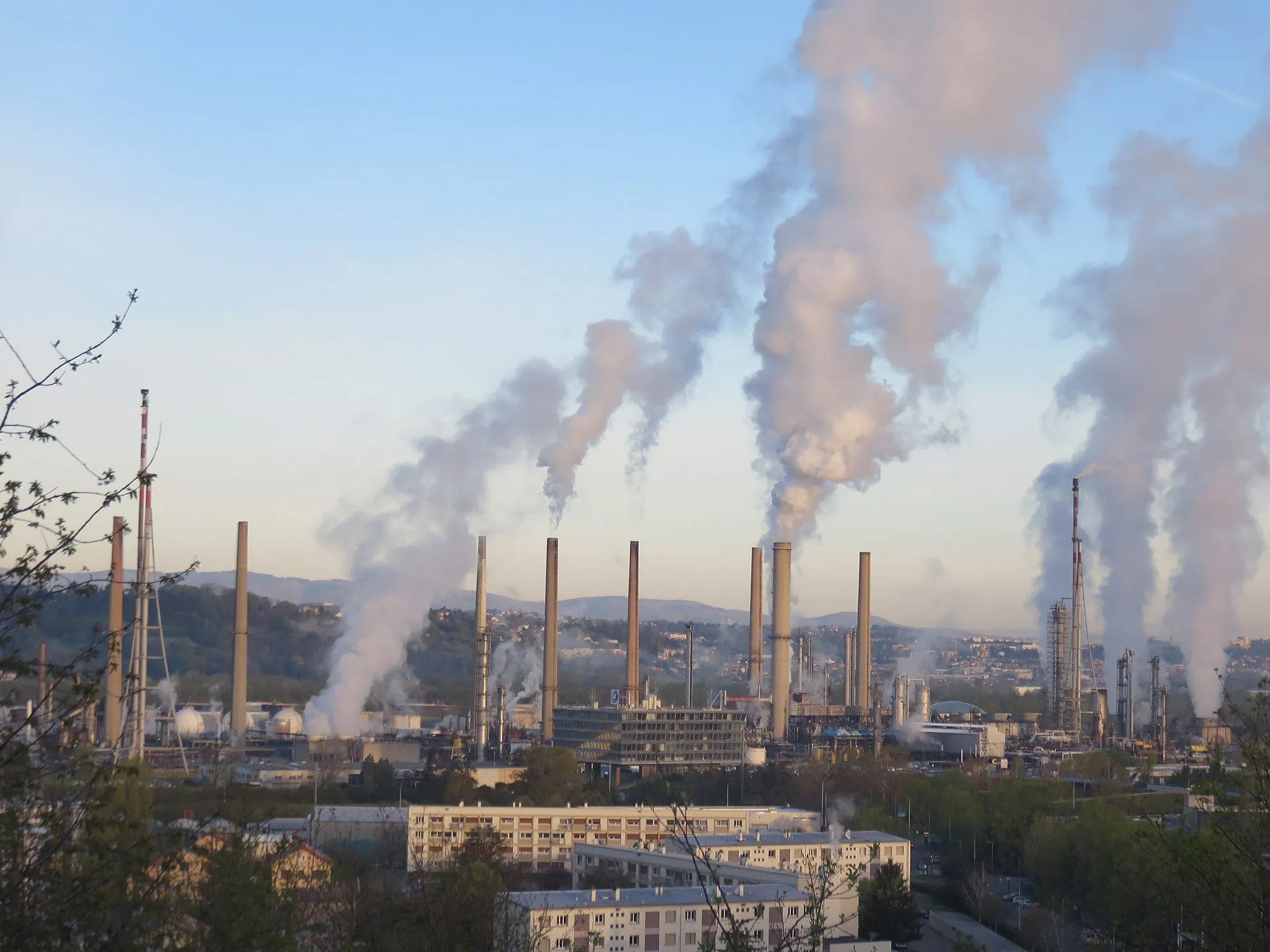
Classified installations
Assessment of overpressure effects and design of protective measures on permitted sites.
- ICPEFrench classified installations for environmental protection: industrial sites subject to declaration, registration or permit.
- SevesoEuropean directive on the prevention of major accidents involving dangerous substances.
- PPRTFrench technological risk prevention plan: it governs land use around upper-tier Seveso sites.
 © BS&A
Construction and structures
Design and justification of structures, through to ultra-high performance fibre-reinforced concrete.
- EurocodesEuropean standards for structural design (EN 1990 to EN 1999).
- UFC 3-340-02US Department of Defense criteria for designing structures to resist the effects of accidental explosions.
- NF P18-470French standard for ultra-high performance fibre-reinforced concrete (UHPFRC): specification, performance, production.
- NF P18-710French national addition to Eurocode 2 for the design of ultra-high performance fibre-reinforced concrete (UHPFRC) structures.




Quality and traceability
Our processes are certified, including for the nuclear supply chain.
- ISO 9001International standard for quality management.
- ISO 19443Quality requirements specific to the civil nuclear supply chain, for items and services important to safety.
Our fields of expertise
We model six families of phenomena, from detonation to material fatigue: pick one to see what we calculate.
Explosion
- Internal and external explosion
- Vessel burst and containment rupture
- Military charge and improvised explosive device (VBIED)
- Design of slabs, walls and protective structures
Impact
- Standard projectile impact (ICPE and nuclear frameworks)
- Ballistic impact, primary and secondary fragments
- Perforation, penetration and spalling
- Vehicle impact and anti-ram devices
 © BS&A
Shock and drop
- Heavy load drop (handling)
- Package or container drop
- Aircraft crash
- Design of energy-absorbing devices
Seismic
- Spectral and transient analysis
- Floor response spectra
- Seismic qualification of equipment
- Verification of anchors and fixings
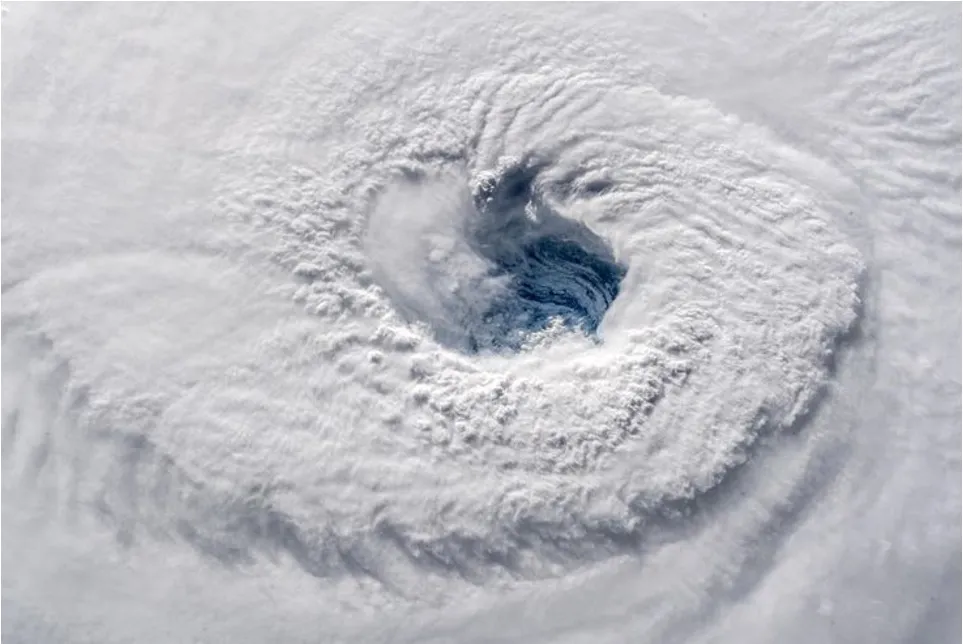 © NASA
Tornado
- Pressure loading (passage depressurisation)
- Extreme wind effects
- Impact of tornado-generated missiles
- Combination of effects per applicable frameworks
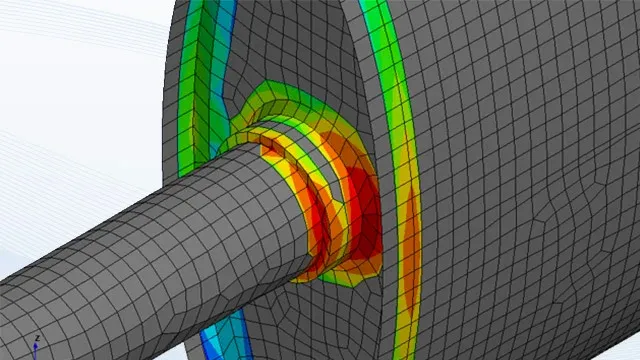 © BS&A
Fatigue
- Damage accumulation (S-N curves)
- Vibration and thermal fatigue
- Crack propagation and damage tolerance
- Remaining life estimation